Digital X-Rays
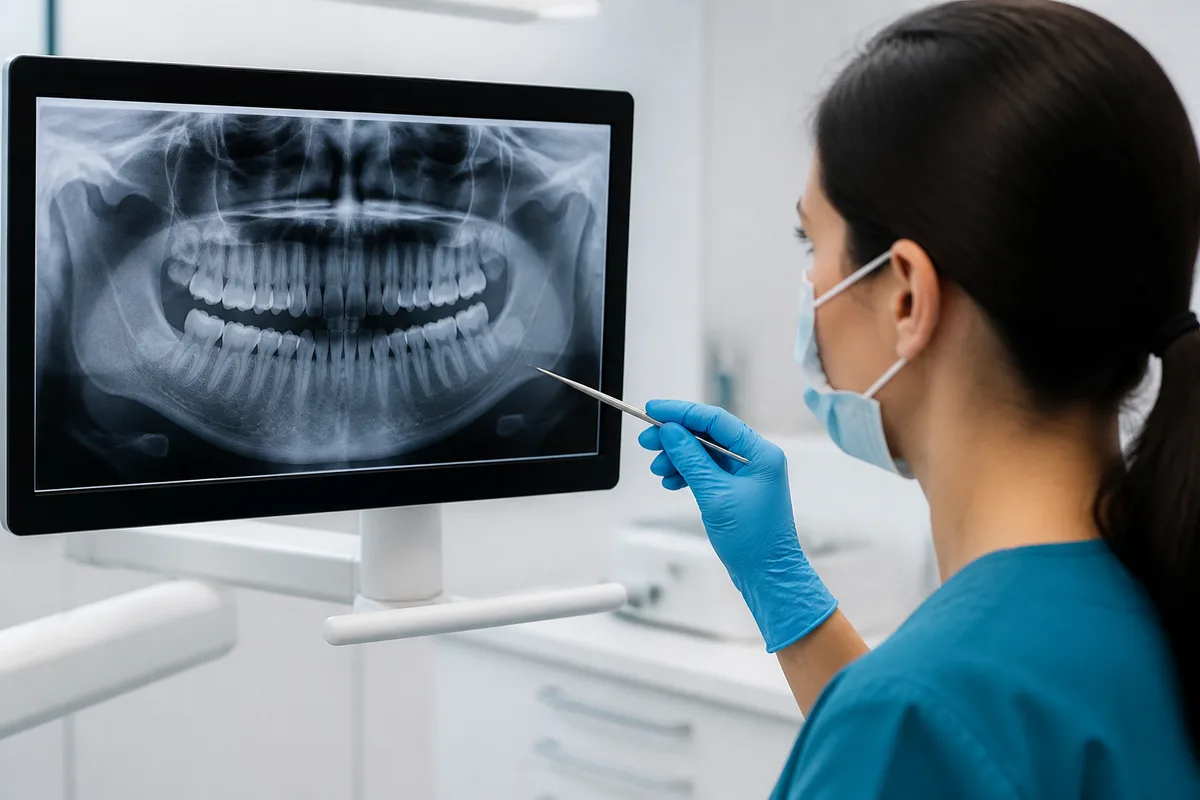
Digital X-Rays
Digital X-rays are a routine part of dental care, offering a fast, low-radiation way to see what's happening beneath the surface of your teeth, gums, and jaw. At Jeremy Montrose, DMD in New York, NY, digital X-ray imaging supports everything from basic checkups to the more detailed evaluations involved in airway- and TMJ-focused dentistry.
What digital X-Rays is
Digital X-rays use electronic sensors instead of traditional film to capture images of the teeth, roots, and supporting bone. The sensor sends the image directly to a computer screen, where it can be viewed, enlarged, and adjusted for contrast in seconds. This replaces the older film-based process, which required chemical development and generally involved more radiation exposure per image.
Because digital sensors are more sensitive than film, they can produce a clear, diagnostic-quality image using a smaller dose of radiation. The images can also be stored electronically, compared side by side over time, and shared easily between members of a dental team when a more coordinated view of a patient's care is needed.
How we use it at Jeremy Montrose, DMD
Digital X-rays at Jeremy Montrose, DMD significantly reduce radiation exposure compared to traditional X-rays while still providing the high-quality images needed for accurate diagnosis. This makes them a practical first step for many visits, whether the goal is a routine check for cavities and bone health or an initial look at a concern that may warrant further evaluation.
For patients being evaluated for more complex conditions — such as TMJ dysfunction, airway and sleep-disordered breathing concerns, or orthodontic planning — a two-dimensional digital X-ray often serves as an early diagnostic layer. When Dr. Montrose determines that a more detailed three-dimensional view of the jaw, joint, or airway is needed, the practice's CBCT (Cone Beam CT) imaging can provide that additional depth. Where soft tissue procedures such as frenectomies are being considered, digital X-ray images can also help inform the broader evaluation alongside the practice's soft tissue laser capability.
What it means for you
Digital X-rays offer several practical advantages for patients:
- Lower radiation exposure — digital sensors typically require less radiation than older film-based X-rays to produce a usable image.
- Faster results — images appear on screen almost immediately, without the wait associated with film development.
- Clearer communication — because the image can be enlarged and reviewed on a screen, it's easier for your dentist to walk you through what they're seeing.
- Easy comparison over time — digital images can be stored and compared at future visits to track changes in teeth, bone, or jaw structure.
These qualities make digital X-rays a comfortable, efficient part of both routine dental visits and more specialized evaluations.
What to expect during your visit
Before the X-ray is taken, you'll typically be asked to remove any jewelry or metal near your head and neck, and you may be given a lead apron or thyroid collar for additional protection. A small sensor is placed inside your mouth, positioned to capture the area being examined, and you'll be asked to hold still for a few seconds while the image is taken.
The process itself is quick — most digital X-ray images take only a few seconds to capture, and a full set for a checkup usually takes just a few minutes. There's no discomfort involved beyond the mild sensation of the sensor in your mouth. Once captured, the image appears on a computer screen right away, allowing your dentist to review it with you during the same visit and discuss any next steps.
Frequently asked questions
Are digital X-rays safe?
Digital X-rays use significantly less radiation than traditional film X-rays while still producing clear, diagnostic-quality images. Protective measures such as lead aprons or thyroid collars may also be used during the imaging process. Your dentist will only recommend X-rays when they are useful for your specific evaluation.
How long does a digital X-ray take?
Capturing a single digital X-ray image typically takes just a few seconds. A full series, if needed for a comprehensive exam, usually takes only a few additional minutes, and the images are available for review immediately.
How often will I need X-rays?
How often X-rays are taken depends on your individual oral health, your history, and what your dentist is monitoring or evaluating. Some patients need them only occasionally as part of a routine checkup, while others may need more frequent imaging as part of an ongoing evaluation, such as for TMJ or airway concerns.
Is digital X-ray imaging suitable for children?
Digital X-rays are commonly used for patients of all ages, including children, because the lower radiation dose makes them a practical option for growth and development monitoring. Your dentist can explain what, if any, imaging is appropriate based on your child's age and needs.
If you have questions about digital X-rays or would like to schedule a visit, reach out to Jeremy Montrose, DMD — we're happy to talk through what to expect.
This content is for general information only and isn't dental or medical advice. Talk with a qualified provider about your own situation. If you have a medical emergency, call 911.