Soft Tissue Laser
Soft Tissue Laser
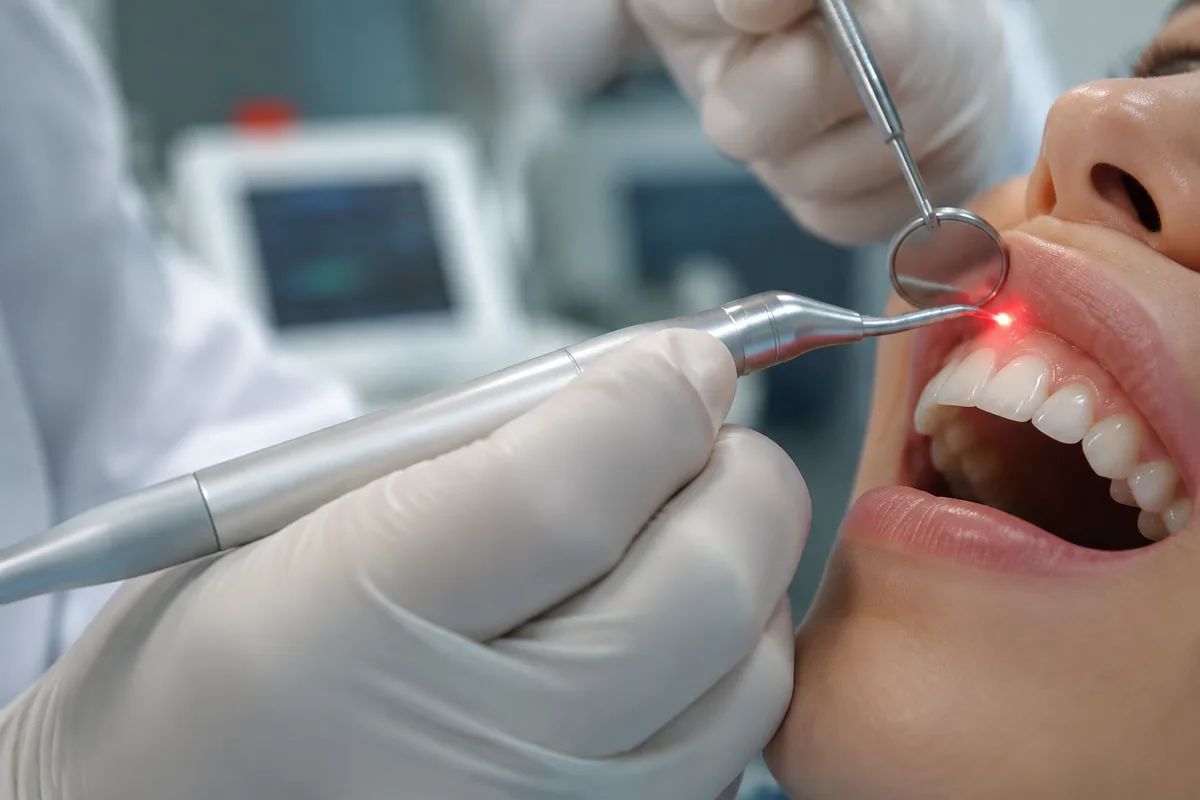
A soft tissue laser is a small handheld instrument that uses a focused beam of light energy to treat the gums, tongue attachments, and other soft tissues inside the mouth. It allows many procedures that once required a scalpel and sutures to be done with less bleeding, less swelling, and often less discomfort. At Jeremy Montrose, DMD, the laser is used for precise, minimal-discomfort frenectomy procedures and other soft tissue treatments supporting airway and sleep care.
What soft Tissue Laser is
Soft tissue lasers work by delivering light at a wavelength that is absorbed by water and pigment in the tissue. As the beam contacts the tissue, that energy converts to heat, which allows the dentist to remove or reshape a small area of tissue with a very fine margin of control. Because the same energy seals small blood vessels and nerve endings as it works, bleeding is typically minimal and stitches are frequently unnecessary.
Before lasers became common in dentistry, soft tissue procedures such as releasing a tongue-tie or reshaping a gum margin were performed with a scalpel or scissors. Those methods are still valid and still used, but they generally involve more bleeding during the procedure, which can make it harder to see the surgical field clearly, and often require sutures and a longer settling-in period afterward.
Common soft tissue laser applications in general and airway-focused dental practices include:
- Frenectomy and frenuloplasty — releasing a restrictive band of tissue under the tongue or lip.
- Gum contouring — reshaping small amounts of gum tissue for function or comfort.
- Treating sore spots and lesions — managing irritated tissue in a defined, controlled way.
- Improving visibility — the near-bloodless field lets the clinician see exactly what is being released.
How we use it at Jeremy Montrose, DMD
The laser is used here primarily for frenectomy procedures and other soft tissue treatments that support airway and sleep care. These procedures sit alongside the practice's work in tongue-tie release, lip-tie release, infant tethered oral tissue evaluation, and myofunctional therapy, where a restricted tongue or lip attachment can limit how the tongue rests and moves, and in turn affect feeding, speech, breathing, and jaw development.
Dr. Jeremy Montrose, D.M.D., completed the Comprehensive Frenulum Inspection and Surgery Workshop (Infant to Adult) through the Academy of Orofacial Myofunctional Therapy and Functional Frenuloplasty training at the Breathe Institute, and he is an Orofacial Myofunctional Therapist trained through the Breathe Institute. He lectures on functional tongue-tie release and myofunctional therapy, and his clinical focus includes functional frenuloplasty for tongue and lip ties in patients of all ages.
Laser treatment is rarely a stand-alone step. It is typically planned after an evaluation of how the tissue is actually functioning, and it may be paired with myofunctional therapy before and after release. Other on-site tools support that planning: digital X-rays for clear images with reduced radiation exposure, and CBCT imaging, which gives a detailed three-dimensional view of jaw, joint, and airway structure when airway or orthodontic questions are part of the picture.
What it means for you
For patients, the practical differences are comfort and simplicity. A laser procedure is usually quick, the treated area is small and well defined, and because bleeding is limited, the appointment tends to stay calm and straightforward — which matters especially with infants and young children. Sutures are often not needed, and the visit can frequently be completed in the same appointment as the consultation or follow-up discussion.
There is also a communication benefit. With a clear field, the clinician can show you what is being addressed and explain how the release relates to tongue movement, breathing, or appliance therapy, so you understand the reasoning rather than just the procedure.
What to expect during your visit
A visit begins with an evaluation of the tissue and how it functions — how the tongue lifts, extends, and rests, and how that connects to feeding, speech, or breathing concerns. If a release is appropriate, you will be told what will happen and what aftercare involves before anything begins.
The procedure itself is short, commonly a matter of minutes. The area is numbed first, and protective eyewear is worn. Most people describe a sensation of pressure and warmth rather than pain, along with a faint smell from the laser. Afterward, you will be given stretching or movement exercises to do during healing, and follow-up is arranged so the release can be checked as the tissue settles.
Frequently asked questions
Is a soft tissue laser safe?
Soft tissue lasers are a well-established tool in dentistry and are used at low energy over very small areas. Eye protection is worn by everyone in the room, and the laser only affects the tissue it is directed at. Your clinician will review your health history before any procedure.
Does it hurt?
Local anesthetic is used so the area is numb during treatment, and most patients feel pressure rather than pain. Because the laser seals as it works, there is usually little bleeding and often no stitches. Mild soreness for a few days afterward is normal and typically managed with simple measures.
How long does the procedure take?
The laser portion of a frenectomy is generally brief — often only a few minutes. The appointment itself is longer because it includes evaluation, numbing, aftercare instruction, and time for your questions. Healing exercises continue at home for a period afterward.
Who is it suitable for?
Soft tissue laser procedures can be appropriate for patients of all ages, from infants with tethered oral tissues to adults seeking functional release. Suitability depends on your evaluation, health history, and whether the tissue restriction is genuinely affecting function.
If you have questions about soft tissue laser treatment or whether a release might be right for you or your child, we invite you to get in touch with Jeremy Montrose, DMD and arrange a visit.
This content is for general information only and isn't dental or medical advice. Talk with a qualified provider about your own situation. If you have a medical emergency, call 911.